
Red Flags When Shopping or Searching Online

Summary Online shopping offers convenience, but it also creates opportunities for scammers. Learn how to shop and browse more confidently by recognizing warning signs early.Key Takeaways
  • Watch for unrealistic prices and unusual payment requests.
  • Research websites before making purchases.
  • Look for signs that a website is legitimate.
  • Protect payment information when shopping online.
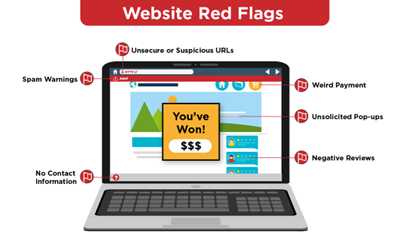
Scammers love to make you think their websites are legit so you’ll send money or give out personal info they can use. But next time you click a Facebook ad or search online for a job, a great deal on anything from a laptop to a loan, or even a new puppy, you’ll know exactly what to watch out for! Unsecure or Suspicious URLs. If the web address doesn’t show a locked padlock icon, or if it starts with “http” vs “https,” scammers likely can see info you enter on the site.Spam Warnings. Flashing alerts or exclamations? Your web browser’s trying to tell you something feels off.Weird Payment. Wire transfer, money order, international funds transfer, pre-loaded cards or Bitcoin are fishy payment requests. And don’t give out online banking logins – even if you’re told it’s “to deposit a check for you.”Unsolicited Pop-ups. That big prize or other random enticing messages popping up on screen are telltale “uh-oh” signs.No Contact Information. Be wary if there isn’t any customer support contact to answer your questions, or if contact info doesn’t seem to match up with other details on the site.Negative Reviews. Search the company’s name or check social forums like Reddit to see what people say about it.Share these red flags with family and friends so we can all look out for each other when surfing, searching and shopping online. If you think you’ve been scammed, or if you’ve given out your username, password, PIN or account info, contact your financial institution right away. Summit members can reach us for help at 800-236-5560.

Want More Fraud-Fighting Tips?

Keep exploring more ways to . Source:
You might also be interested in Stay alert: Scammers are impersonating Summit with increasingly convincing tactics. Learn the red flags and protect your information... Fraudsters are posing as the FBI or major companies to steal money—never send cash or wires to unknown callers... Summary Unexpected messages can be more than an inconvenience—they can be a scam. Learn how to spot phishing attempts and make confident decisions before... Summary Tax season creates opportunities for scammers looking to steal personal and financial information. Stay alert and protect your identity by recognizing... Hosting dinner parties. Heading to your in-laws’. Hustling to order those perfect gifts. It’s the season for cheer and goodwill, and unfortunately also... Scammers are getting better and better at making fake links look legit. So before you click on that URL (the string of letters that makes up a web address)... Hey there, fellow fraud-fighters! Have five minutes to bust some common myths about scams? Because the more you know, the more you can stop fraudsters... Summary Your Social Security number is one of your most valuable pieces of personal information. Learn how scammers try to access it and what you can... Summary Artificial intelligence is creating new opportunities—and new risks. Learn how scammers are using AI tools and stay ahead. Key Takeaways AI can...